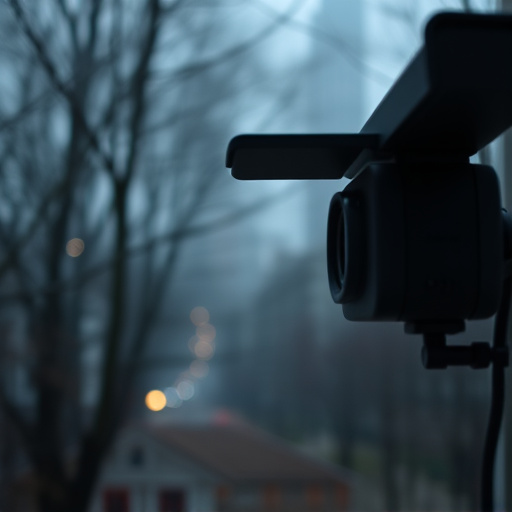
Optimizing indoor hidden security camera placement involves addressing nighttime glint detection to ensure effective surveillance. By understanding how reflective surfaces cause unwanted glare and adjusting camera settings, you can minimize direct line-of-sight from external lights while maintaining clear image quality. Advanced techniques like ambient light analysis and image processing revolutionize detection in low-light conditions, distinguishing between genuine threats and false positives. Strategic sensor positioning, leveraging shadows, enhances indoor hidden camera placement, providing comprehensive security coverage without detection.
In the realm of indoor hidden security camera placement, detecting lens glints in low-light conditions is a critical challenge. This article delves into innovative methods to overcome the limitations of traditional lens detection techniques. We explore how ambient light and shadow analysis, coupled with advanced image processing, enables accurate identification of camera lenses even at night. Additionally, we provide insights on optimizing camera placement for enhanced security, ensuring comprehensive surveillance in challenging lighting environments.
- Understanding Nighttime Glint for Indoor Cameras
- Challenges of Traditional Lens Detection Methods
- Leveraging Ambient Light and Shadow Analysis
- Advanced Image Processing Techniques for Accurate Identification
- Optimizing Camera Placement for Enhanced Security
Understanding Nighttime Glint for Indoor Cameras
Nighttime glint detection is a critical aspect of optimizing indoor hidden security camera placement. In low-light conditions, reflective surfaces like windows or shiny objects can cause unwanted glare, affecting image quality and potentially revealing the camera’s position. Understanding this phenomenon is key to deploying effective security measures.
Indoor cameras must be strategically placed to minimize direct line-of-sight from external sources of light, such as street lamps or nearby buildings. Additionally, adjusting camera settings, including ISO, exposure time, and gain, can help reduce glint by balancing light sensitivity with image clarity. Careful consideration of these factors ensures that the camera remains hidden while providing clear and reliable surveillance during nighttime hours.
Challenges of Traditional Lens Detection Methods
Traditional lens detection methods often face significant challenges when applied to indoor hidden security camera placement scenarios. These methods typically rely on visual analysis, where algorithms scan for distinct patterns or glints that indicate a camera’s presence. However, in enclosed spaces with controlled lighting, such as homes or offices, the contrast between the camera lens and its environment is reduced, making these signatures harder to detect.
The indoor setting presents unique obstacles, including low-light conditions, which can obscure visual cues. Reflective surfaces, common in modern interiors, can also interfere, causing false positives or negatives. Additionally, traditional methods may struggle with the variety of camera types and angles, as well as the dynamic nature of indoor environments where furniture placement and lighting setups can frequently change. These limitations highlight the need for advanced techniques that adapt to the specific challenges posed by indoor hidden security camera detection.
Leveraging Ambient Light and Shadow Analysis
Leveraging ambient light and shadow analysis is a sophisticated method employed in night-time security camera lens glint detection. By understanding the dynamics of light in indoor environments, this approach enhances the effectiveness of hidden security cameras. Shadows cast by objects or individuals within a space can provide critical clues about their location and movement, especially in low-light conditions.
For optimal indoor hidden security camera placement, strategizing ambient light and shadow analysis involves carefully positioning sensors to capture these subtle variations. This technique allows for precise identification of glints, enabling the system to distinguish between genuine threats and false positives. In essence, it transforms shadows from mere visual elements into valuable data points, revolutionizing night-time surveillance and ensuring enhanced security in diverse indoor settings.
Advanced Image Processing Techniques for Accurate Identification
Advanced image processing techniques play a pivotal role in accurately identifying glints from indoor hidden security cameras, especially in low-light conditions. These sophisticated algorithms can analyze and interpret visual data at a granular level, enhancing the detection capabilities significantly. By employing edge detection, noise reduction, and contrast enhancement methods, the system improves its ability to distinguish between natural light sources and camera lens reflections. This precision is crucial for effective indoor hidden security camera placement, ensuring that glints from unexpected angles or hidden cameras are swiftly recognized without false positives.
In the context of indoor spaces, where lighting conditions can be variable and challenging, these advanced techniques enable more reliable monitoring. The algorithms adapt to different settings, whether it’s a dimly lit room or well-lit area with direct sunlight, by dynamically adjusting parameters to maintain consistent glint detection performance. This adaptability is essential for comprehensive security coverage in diverse environments, making the system a powerful tool for identifying potential threats from hidden surveillance equipment.
Optimizing Camera Placement for Enhanced Security
Optimizing camera placement is a critical step in enhancing security, especially for indoor hidden security camera systems. Strategically positioning cameras can significantly improve surveillance capabilities. One key aspect is to place them where they have unobstructed lines of sight, avoiding areas that might be blocked by furniture or natural obstacles. This ensures clear and detailed footage.
For instance, mounting cameras on ceilings or high walls can provide a comprehensive view of a room without being easily noticed. Additionally, considering the lighting conditions is essential; ensuring adequate illumination around the target area allows for better image quality, facilitating accurate glint detection during night operations. Proper camera placement, combined with suitable lighting, becomes a powerful tool in enhancing indoor security measures.
The detection of camera lens glints in nighttime indoor settings is a complex challenge, but with advanced techniques and thoughtful camera placement, significant improvements can be made. By understanding the unique challenges of nighttime conditions, leveraging ambient light and shadow analysis, employing sophisticated image processing, and optimizing hidden security camera positioning, it’s possible to enhance surveillance capabilities and ensure more effective indoor security. These strategies not only improve the accuracy of glint detection but also contribute to a robust and discreet security system tailored for indoor environments.